Unveiling Lefkada: A guide to the island’s iconic shoreline
Some info on Lefkada
Lefkada (Lefkas) is one of the Ionian Islands, a group of islands in the Ionian Sea in western Greece. It is located to the south of the islands of Corfu and Paxos, and to the north of Kefalonia and Ithaca. Access is possible either by car/bus or by plane. It is 350 km away (3 h 40 min) from Athens via Olympia (A8) and Ionia (A5) Motorways and the Rio-Antirrio bridge, and 370 km away (less than 4 hours) from Thessaloniki via Egnatia Motorway (A2). Access from mainland Greece to the island is conveniently provided by a toll-free floating bridge. Alternatively, Aktion International Airport (PVK) is just 20 km away from the town of Lefkada.
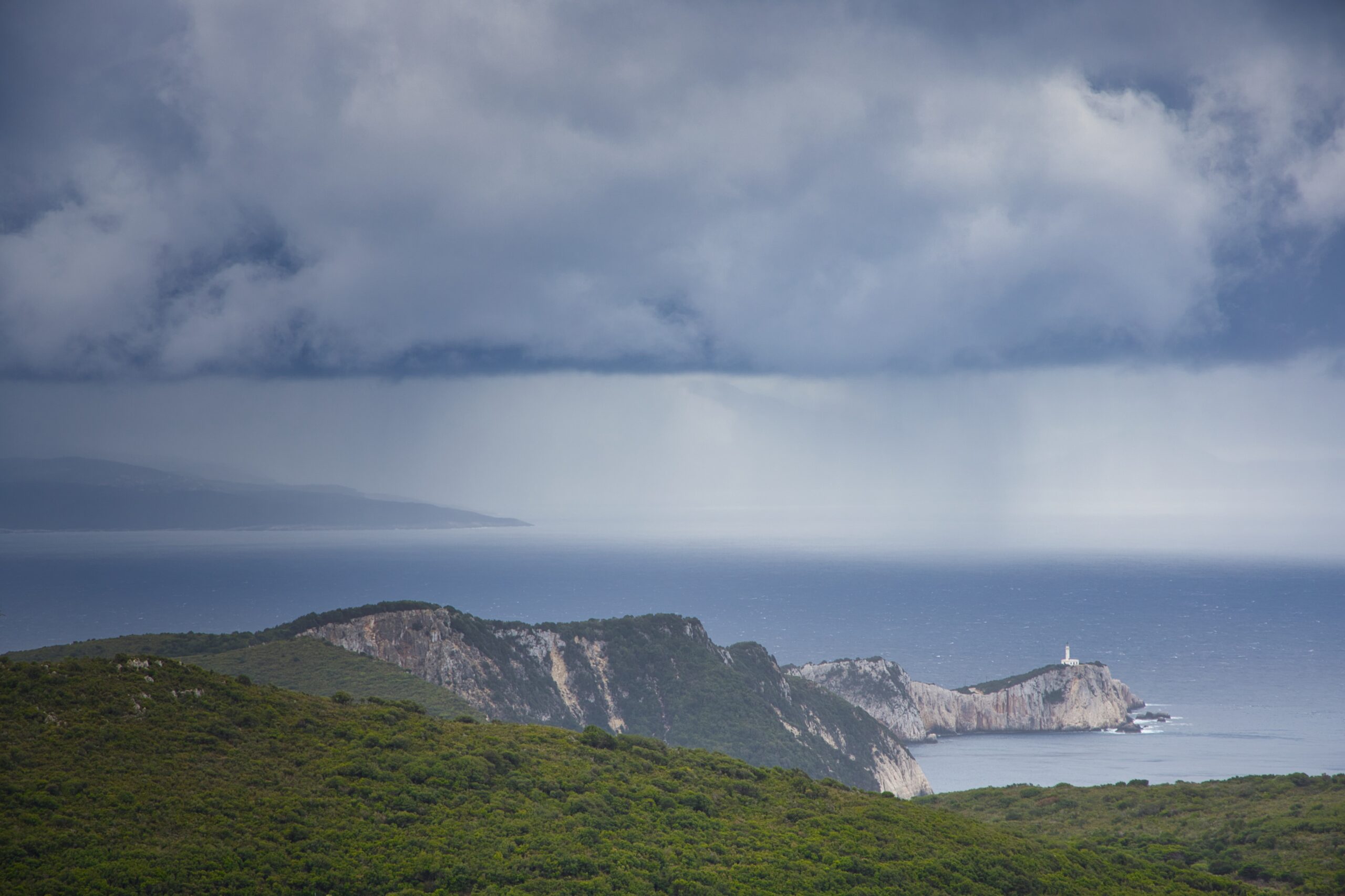
According to ancient sources, the name of the island was probably inspired by the white (Greek: lefko) color of the cliffs on the south edge of the island, at the famous since antiquity Cape Lefkatas, which held one of the ancient world’s best-known sanctuaries: the Temple of Apollo Lefkatas. This was the site of an annual festival in the god’s honor. A lighthouse now stands on its ruins, at the same cliff known today as Sappho’s Leap. According to ancient legend— repeated by later ancient Greek and Roman writers — Sappho leapt from the white cliffs here, driven to despair by her unrequited love for Phaon, a ferryman to whom the goddess Aphrodite had granted youth and beauty.
Lefkada’s history as an island dates at least back to the bronze age. Homer’s Odyssey references a fortified town on the NE coast called Nericus, said to have been captured by Laertes, Odysseus’s father. On the 7th century BC, settlers from Corinth founded the city of Leukas, resettled the people of Nericus into the new city and dug a canal separating the peninsula from the Akarnanian mainland. As a Corinthian colony, Leukas sent ships to the Battle of Salamis in 480 BCE and later joined the Peloponnesian War on the Spartan side. The city fell under Macedonian rule before gaining independence and coming under Roman control in 197 BCE.
Excavations near modern Lefkada town, begun by archaeologist Wilhelm Dörpfeld in the early 20th century, have uncovered the ancient city’s fortification walls and a remarkable ancient theatre at Koulmos Hill. The latter is a massive construction with up to 11000 capacity, the first and only ancient theater ever found in the Ionian islands, built in the 4th century BCE.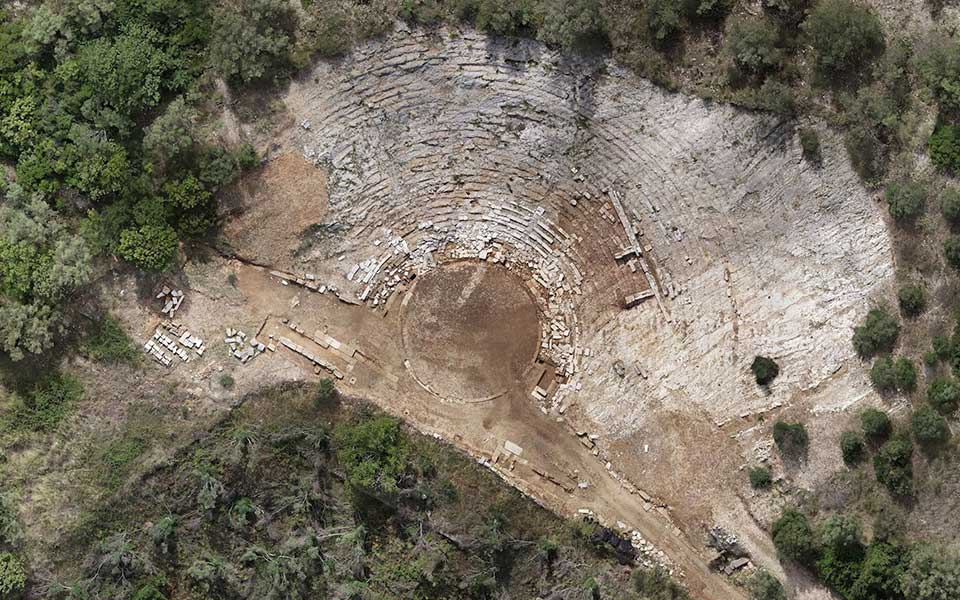
The landscape
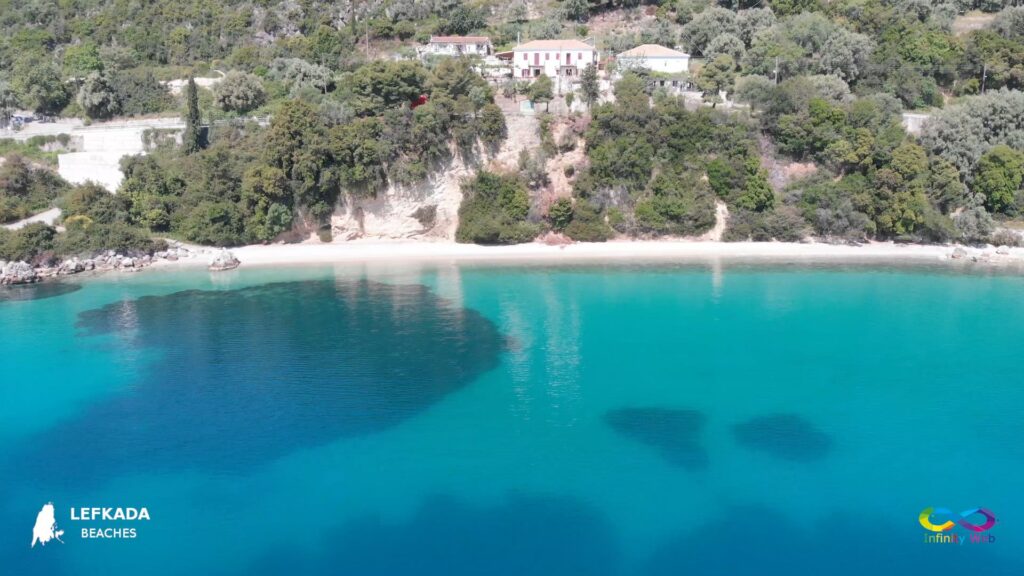
Lefkada is one of the most popular Ionian touristic destinations in Greece because of its distinctive natural beauty. Lefkada’s landscape is defined by a sharp contrast between mountain and sea. The island’s interior rises steeply into pine-covered slopes and terraced olive groves, while the coastline drops directly into turquoise water — a result of the limestone seabed, which reflects sunlight and gives the water its trademark color, especially visible from beaches like Porto Katsiki and Egremni. 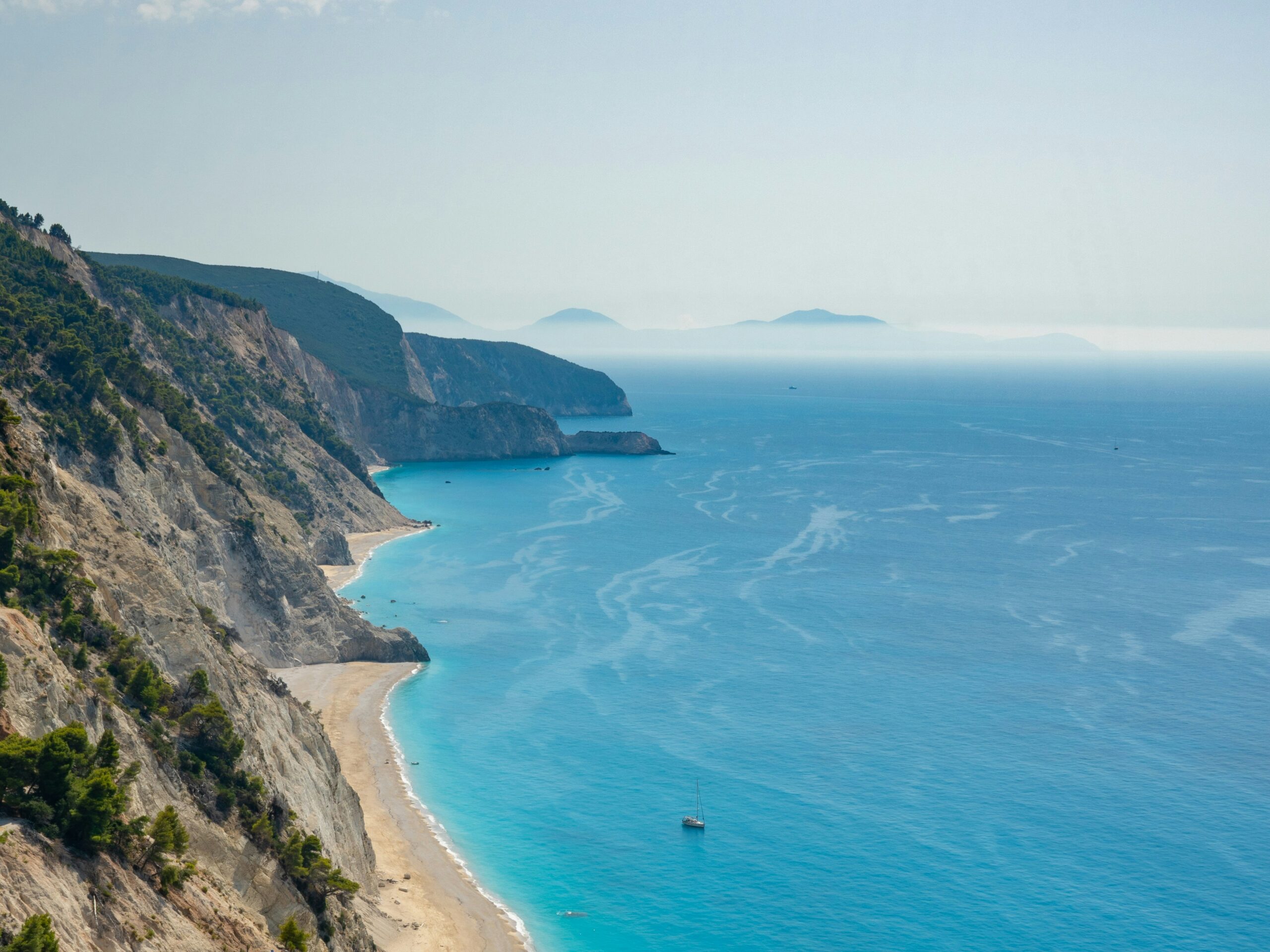
This mountain-to-sea transition happens quickly, often within a few kilometers. The west side of the island is more remarkable in this regard. Villages like Drymonas sit on the western plateaus at a few hundred meters of elevation, giving properties there direct views over the coastline below — the green of the hillside in the foreground, the sea’s turquoise stretching out toward the horizon, and on clear days, the islands of Paxos, Antipaxos, and even Corfu visible in the distance.
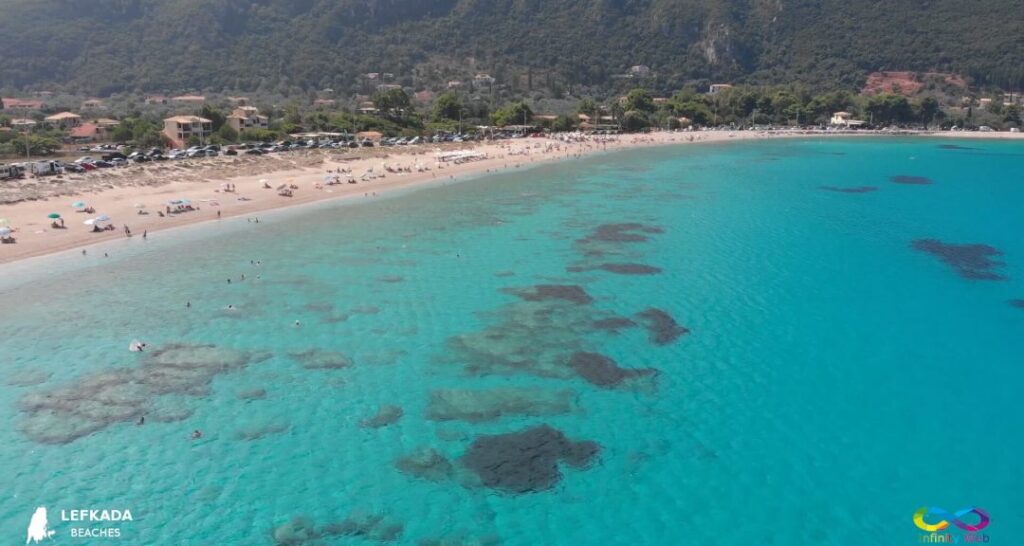
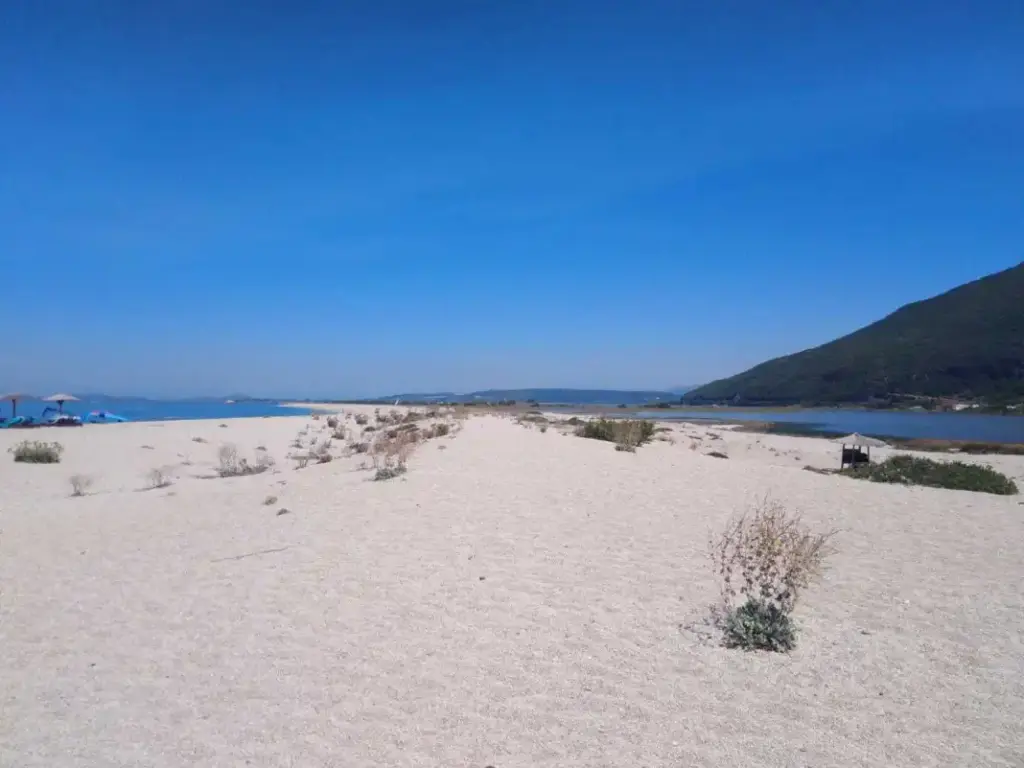
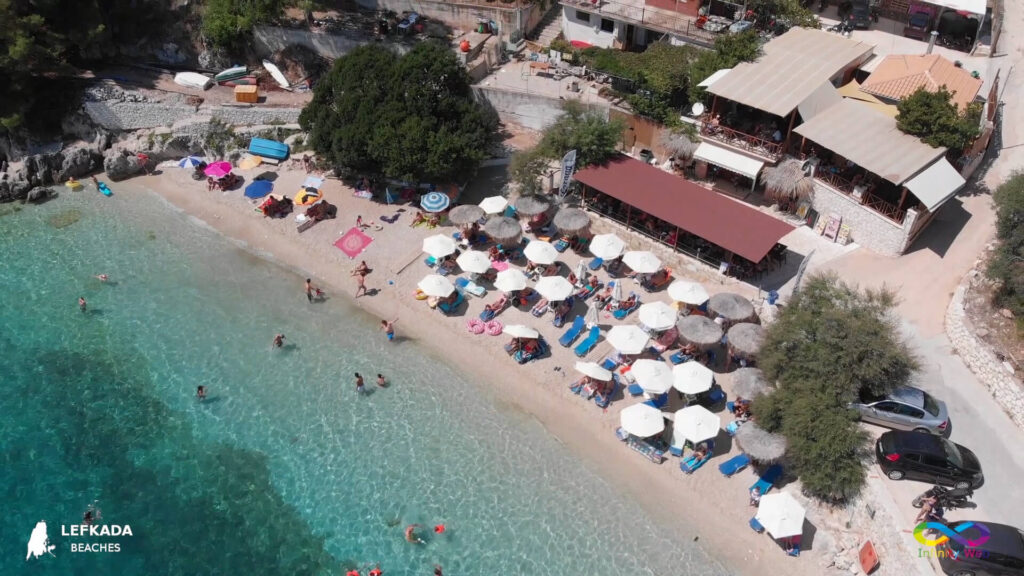
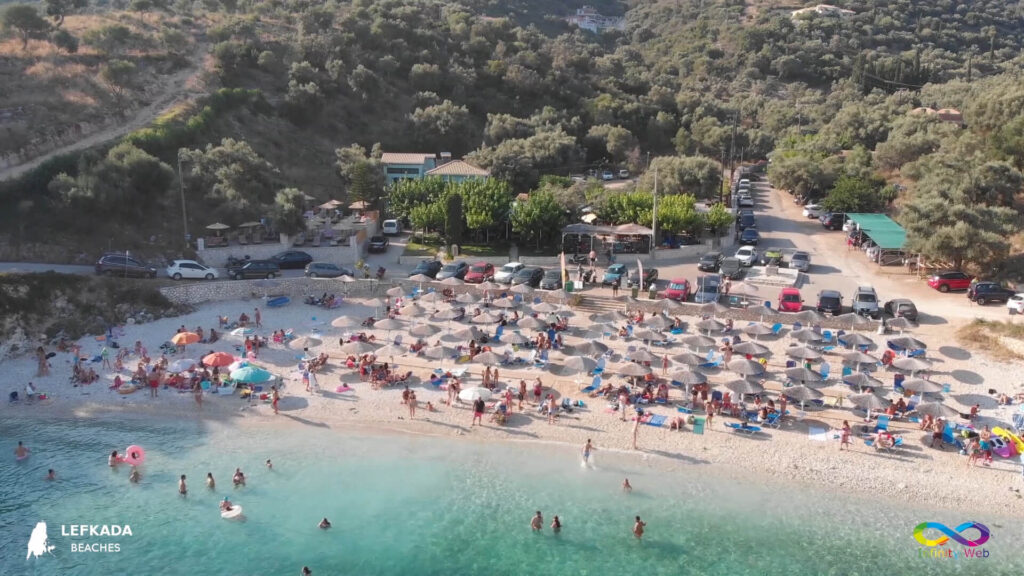
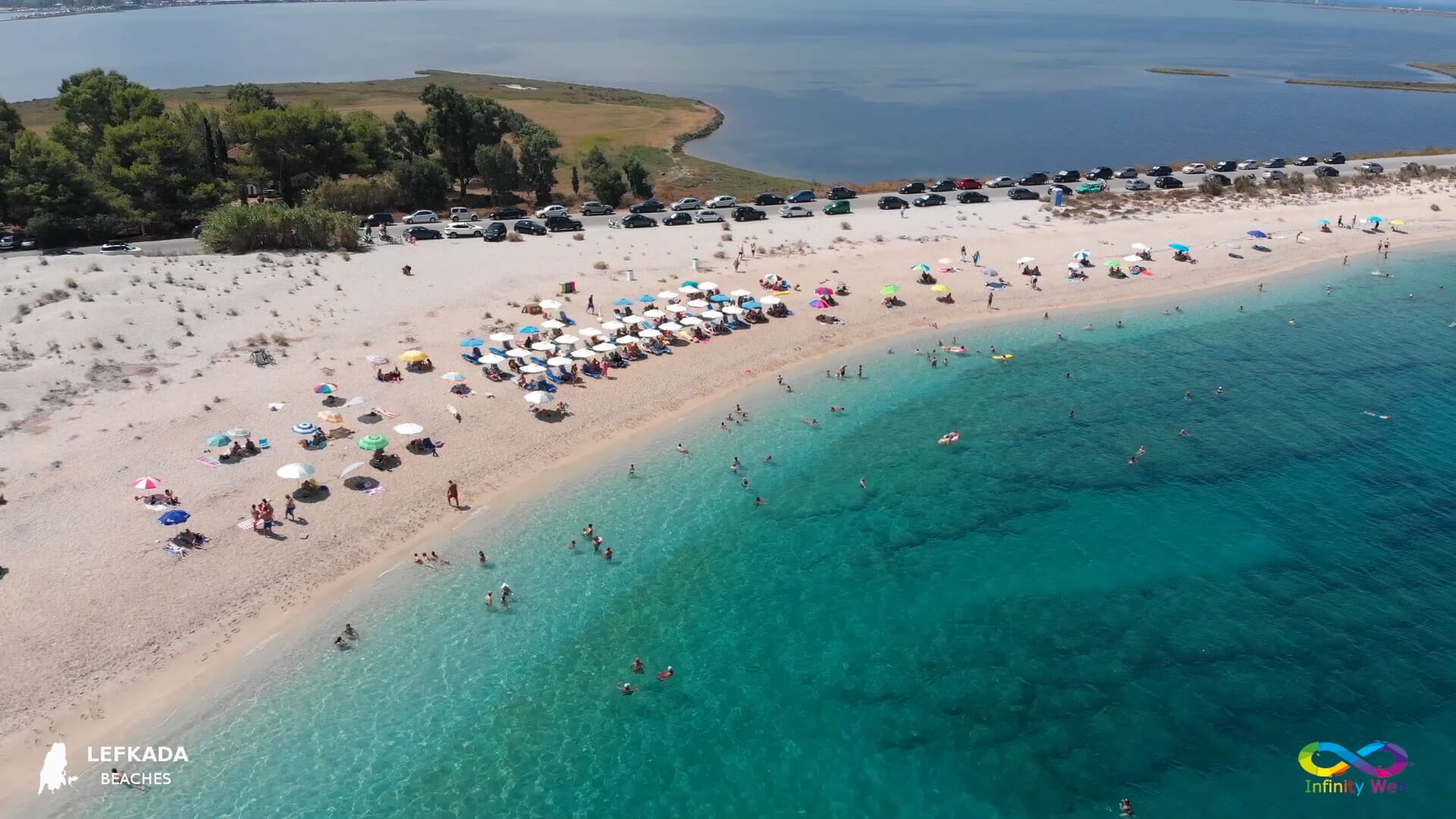
At sea level, only a few kilometers downward, long beaches with white coarse sand or fine light-colored pebbles dominate the coastline. At a short drive’s distance the visitor has access not only to some of the most famous beaches of Lefkada but also to many equally breathtaking hidden gems for those who prefer to relax further away from the crowds.
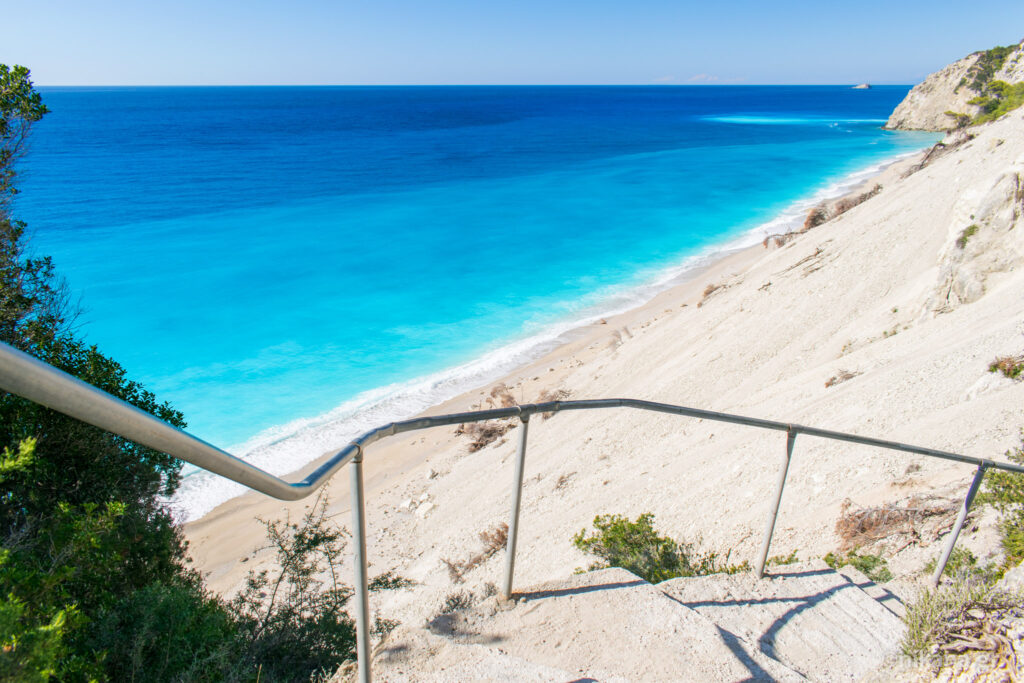
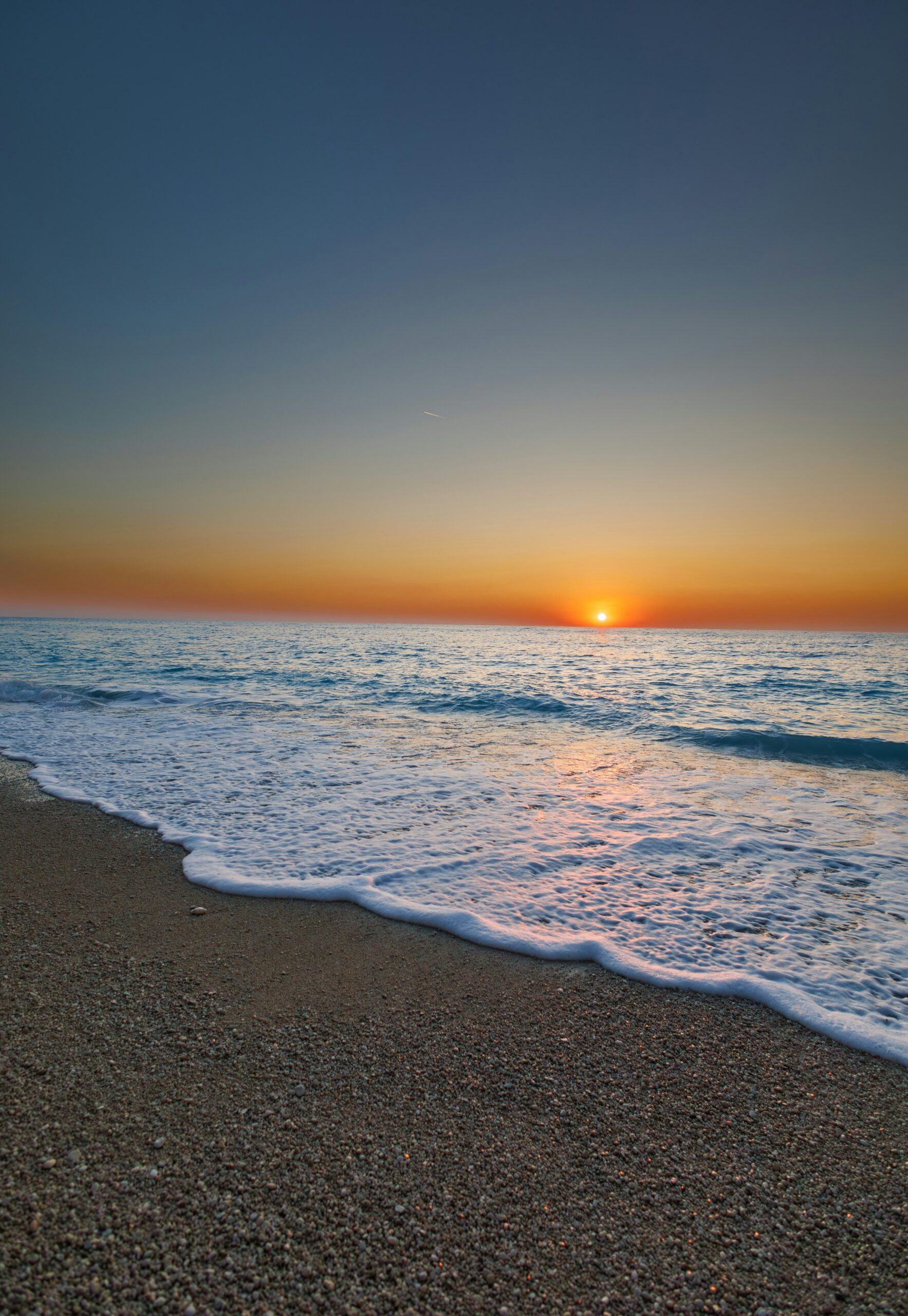
Because of the western orientation, visitors of this part of the island can enjoy the other prominent hallmark of Lefkada: majestic sunsets over the sea. Friends of paragliding can enjoy the views in a more extreme way, taking off from the village of Exanthia.
Beaches of Lefkada
The north side
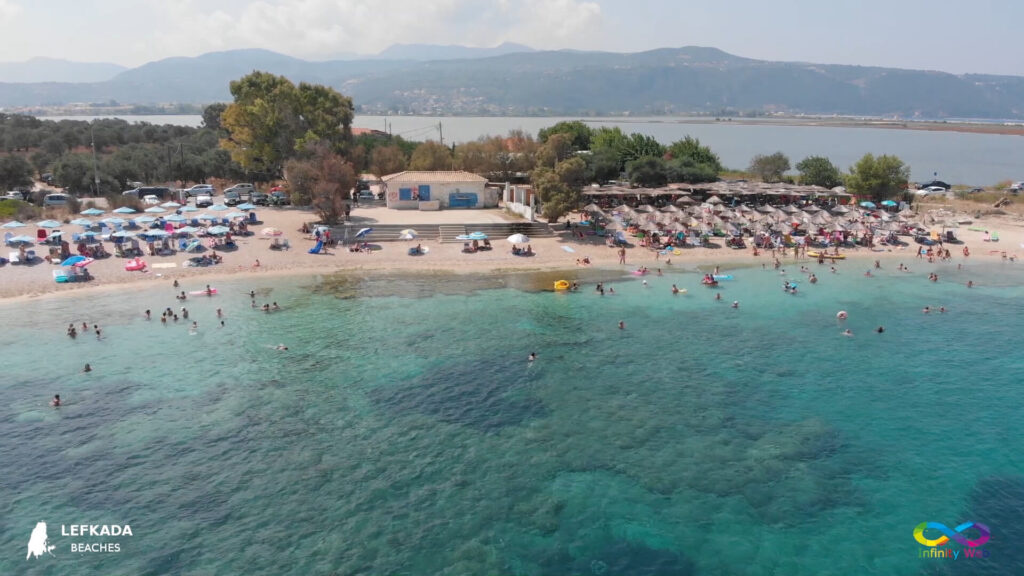
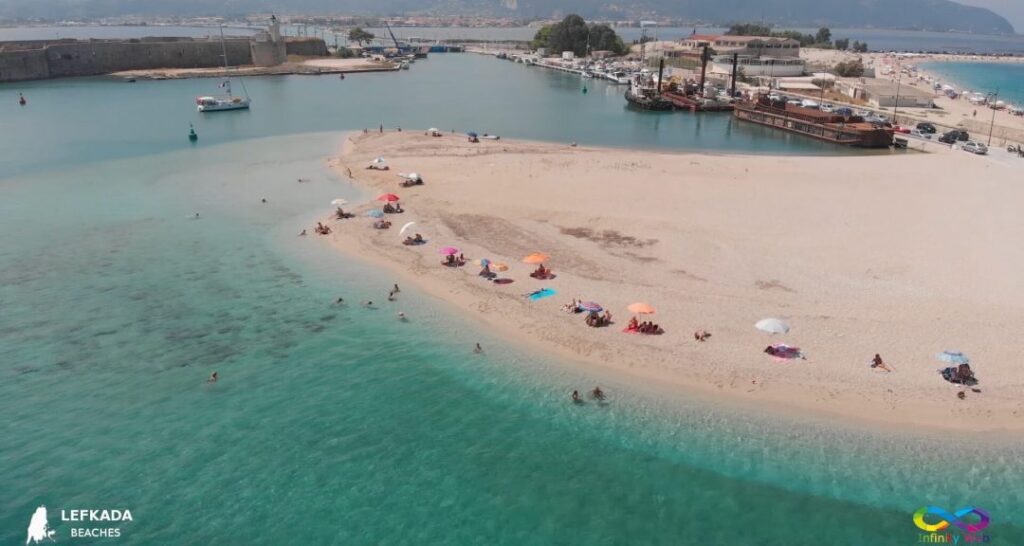
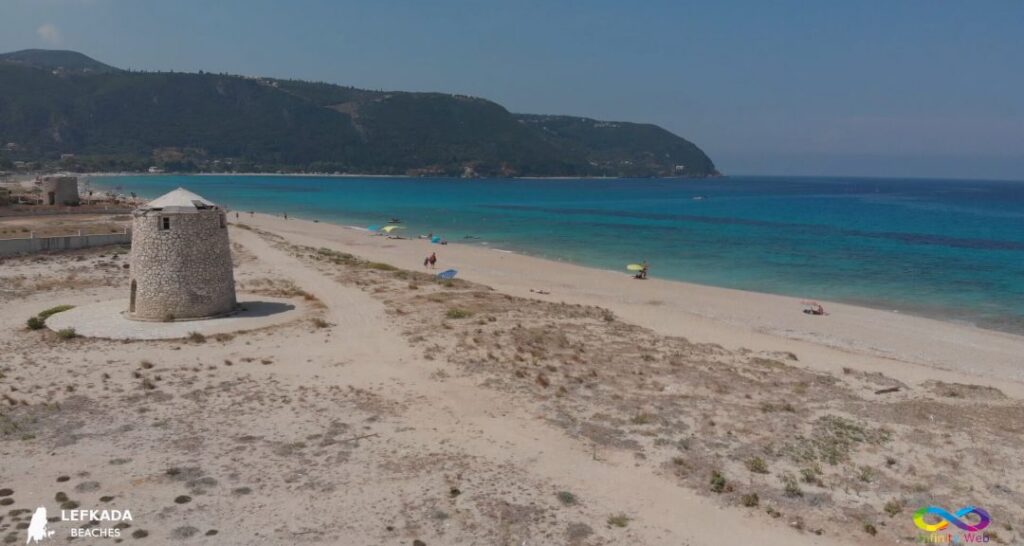
Many scenic beaches are located conveniently close to the city of Lefkada in the north of the island (Amoglossa, Mili, Agios Ioanis, Kastro, Gira) or a little bit outside of it (Vagia). All of them are big and sandy, with easy car access. At Mili, friends of kite surfing can take advantage of the winds of the Ionian to practice their hobby.
The south side
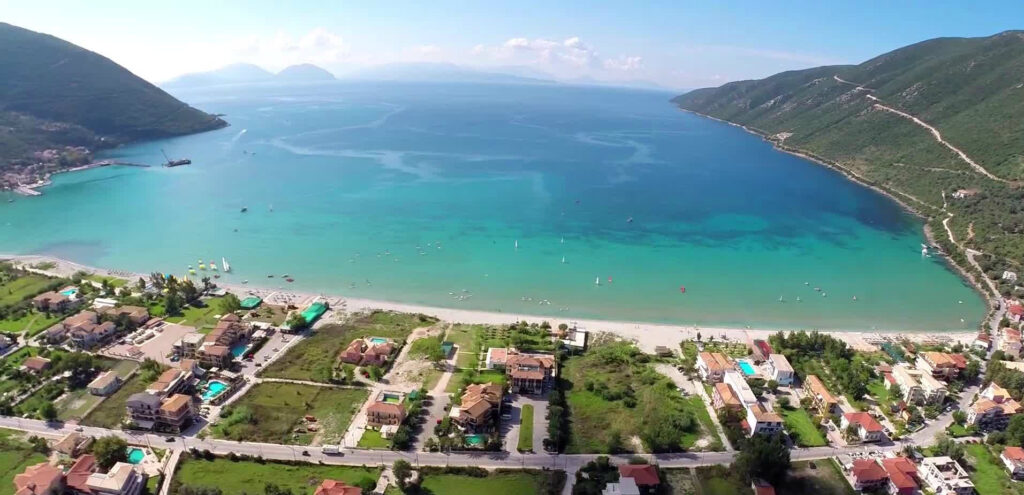
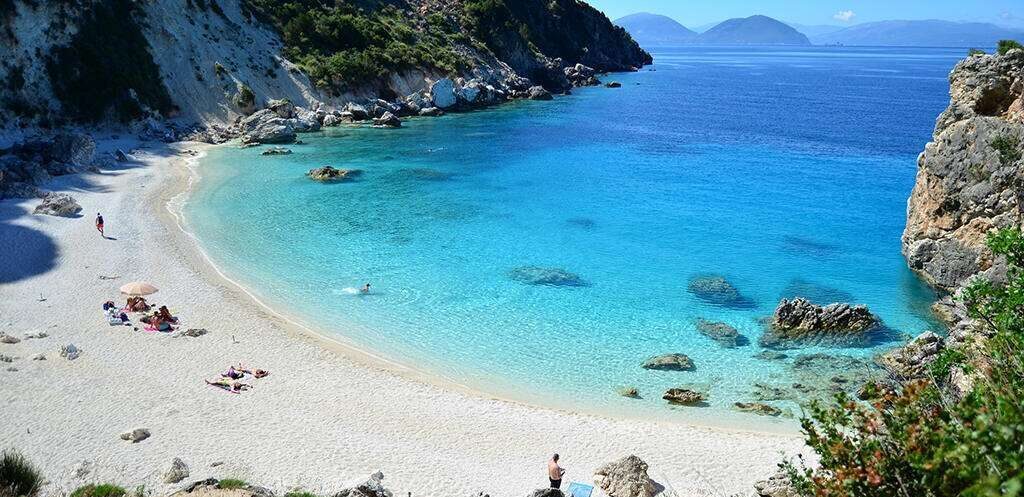
Southward, the beach of Vassiliki bay is one of the most famous beaches in the world for windsurfing and, due to its shallowness and sandy composition, it is also ideal for toddlers. Close to Vassiliki, Agiofili is a small beach of outstanding natural beauty and other notable options are Afteli and Amousso.
The east side
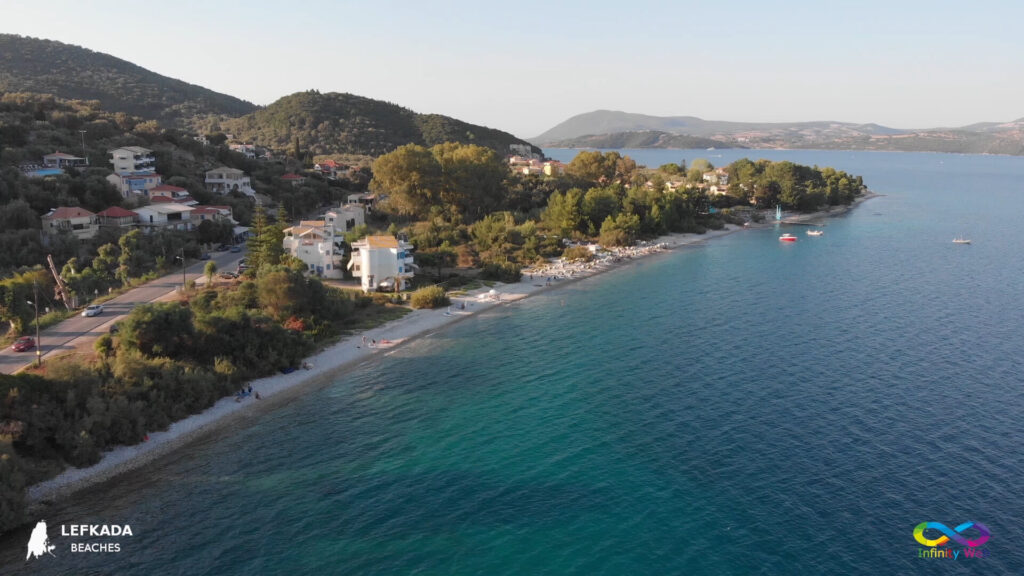
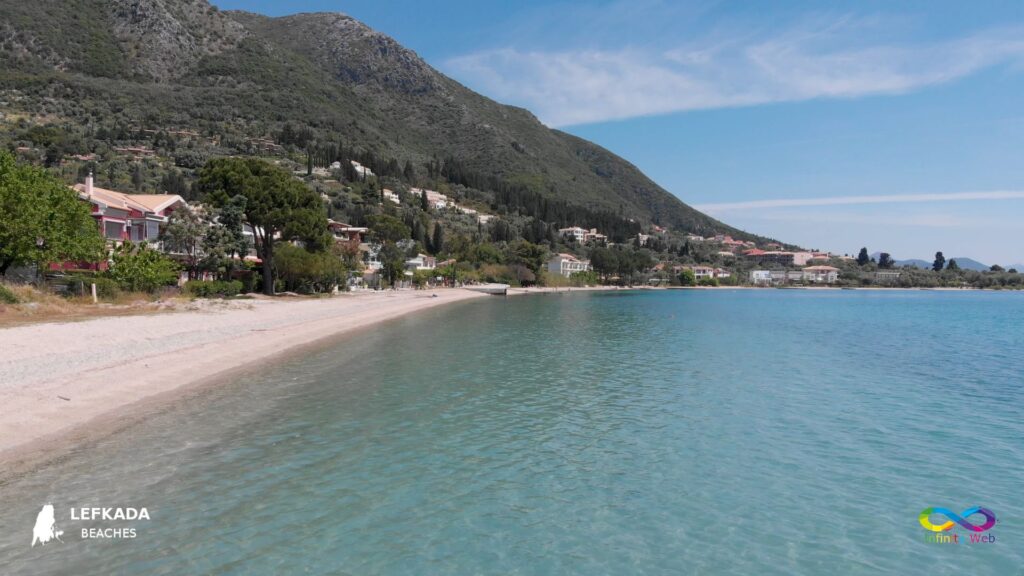
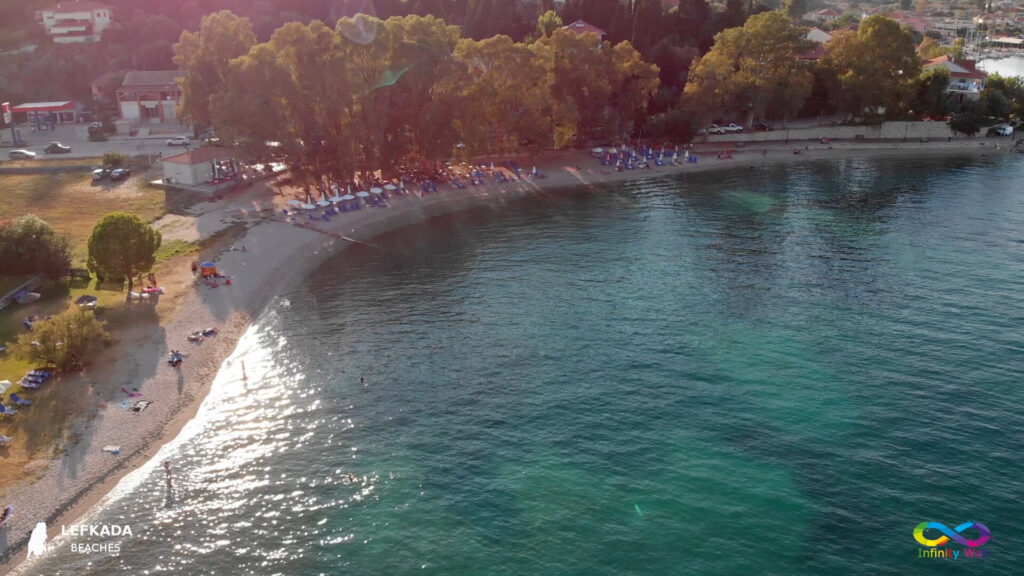
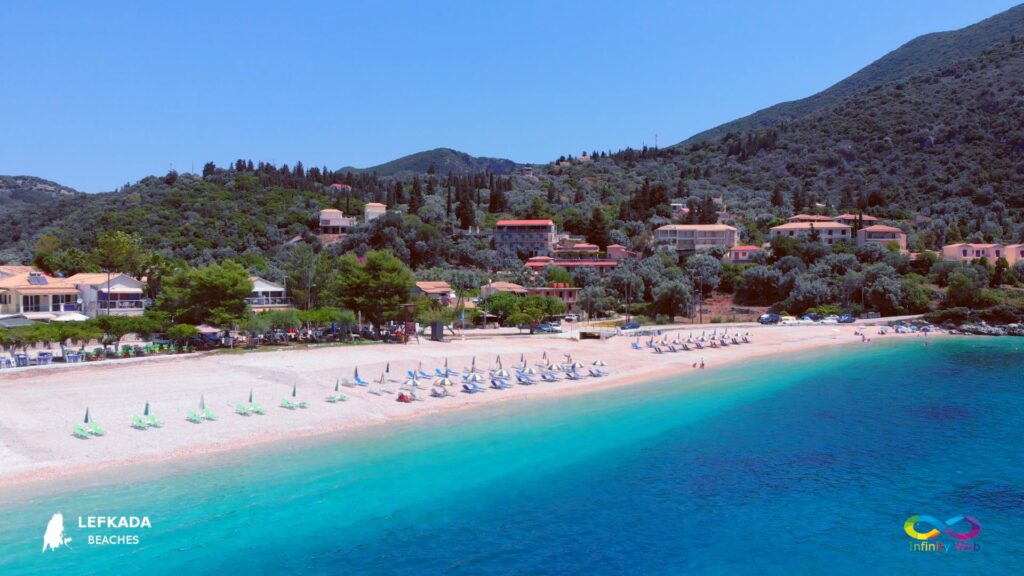
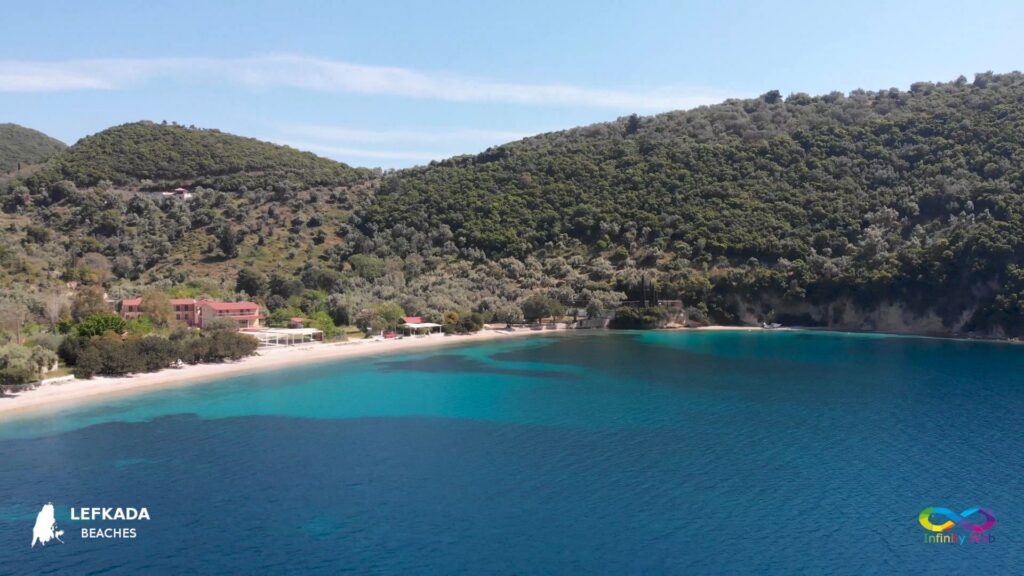
The east side offers numerous worthwhile options that are especially attractive when western winds prevail. Here the beaches are smaller and mostly pebbly. The more notable are Mikros Gialos, Desimi, Pasa and the beaches of Nikiana, Nydri and Ligia.
The west side – around Drymonas
Find a detailed beach guide for western Lefkada beaches here